UEFA Champions League Winners List: Every Champion Since 1956
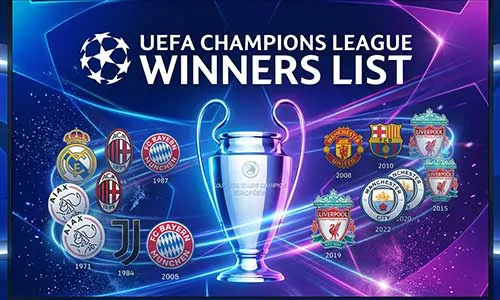
For football enthusiasts worldwide, the UEFA Champions League represents the absolute pinnacle of club football. Since its inception in the mid-1950s, this legendary tournament has crowned the finest teams in Europe, showcasing unforgettable drama, iconic goals, and historic triumphs. Consequently, tracking the evolution of European football is best done by exploring the official UEFA Champions League Winners List: Every Champion Since 1956. From the early era of the European Cup to the fast-paced modern tournament, this list chronicles the rise of dynasties and the fall of giants.
In this comprehensive guide, we will dive deep into the history of the tournament, analyze the dominant eras of European football, and present the complete list of champions. Whether you are curious about Real Madrid’s early supremacy, the dominant English era of the late 70s, or the modern era featuring Paris Saint-Germain’s recent back-to-back victories, this page is your ultimate resource.
Table of Contents
- The Evolution of Europe’s Premier Tournament
- The Complete UEFA Champions League Winners List
- Defining Eras: From the European Cup to the Champions League Era
- Most Successful Clubs: Who Has Won the Most Titles?
- Country-by-Country Breakdown of Champions
- Memorable Finals and Historic Underdogs
- Analyzing the UEFA Champions League Winners List
- Frequently Asked Questions (FAQ)
The Evolution of Europe’s Premier Tournament
The tournament was originally conceived in 1955 as the European Champion Clubs’ Cup, commonly known as the European Cup. Initially, it was a straight knockout tournament open only to the champion club of each country. Over the years, however, the demand for a more competitive and financially lucrative structure grew significantly.
Consequently, in 1992, UEFA rebranded the competition as the UEFA Champions League. This monumental shift introduced a group stage format and, subsequently, allowed multiple entrants from the top-ranked leagues. Therefore, the competition transformed from an exclusive clash of champions into a multi-stage spectacle featuring the absolute elite of European club football.
To explore the rich history and detailed match statistics of these legendary tournaments, you can visit the official UEFA Champions League History Archive. Let us now delve into the ultimate list of those who have claimed the iconic trophy.
The Comprehensive UEFA Champions League Winners List: Every Champion Since 1956
The table below provides the full history of the competition. It displays every final played since the tournament’s inaugural match in 1956 up to the most recent final in 2026. It includes the winners, runners-up, final scores, and the historic venues that hosted these legendary matchups.
| Season | Winner | Score | Runner-up | Venue |
|---|---|---|---|---|
| 1955–56 | Real Madrid | 4–3 | Reims | Parc des Princes, Paris |
| 1956–57 | Real Madrid | 2–0 | Fiorentina | Santiago Bernabéu, Madrid |
| 1957–58 | Real Madrid | 3–2 (aet) | AC Milan | Heysel Stadium, Brussels |
| 1958–59 | Real Madrid | 2–0 | Reims | Neckarstadion, Stuttgart |
| 1959–60 | Real Madrid | 7–3 | Eintracht Frankfurt | Hampden Park, Glasgow |
| 1960–61 | Benfica | 3–2 | Barcelona | Wankdorf Stadium, Bern |
| 1961–62 | Benfica | 5–3 | Real Madrid | Olympisch Stadion, Amsterdam |
| 1962–63 | AC Milan | 2–1 | Benfica | Wembley Stadium, London |
| 1963–64 | Inter Milan | 3–1 | Real Madrid | Praterstadion, Vienna |
| 1964–65 | Inter Milan | 1–0 | Benfica | San Siro, Milan |
| 1965–66 | Real Madrid | 2–1 | Partizan | Heysel Stadium, Brussels |
| 1966–67 | Celtic | 2–1 | Inter Milan | Estádio Nacional, Lisbon |
| 1967–68 | Manchester United | 4–1 (aet) | Benfica | Wembley Stadium, London |
| 1968–69 | AC Milan | 4–1 | Ajax | Santiago Bernabéu, Madrid |
| 1969–70 | Feyenoord | 2–1 (aet) | Celtic | San Siro, Milan |
| 1970–71 | Ajax | 2–0 | Panathinaikos | Wembley Stadium, London |
| 1971–72 | Ajax | 2–0 | Inter Milan | De Kuip, Rotterdam |
| 1972–73 | Ajax | 1–0 | Juventus | Red Star Stadium, Belgrade |
| 1973–74 | Bayern Munich | 4–0 (replay) | Atlético Madrid | Heysel Stadium, Brussels |
| 1974–75 | Bayern Munich | 2–0 | Leeds United | Parc des Princes, Paris |
| 1975–76 | Bayern Munich | 1–0 | Saint-Étienne | Hampden Park, Glasgow |
| 1976–77 | Liverpool | 3–1 | Borussia Mönchengladbach | Stadio Olimpico, Rome |
| 1977–78 | Liverpool | 1–0 | Club Brugge | Wembley Stadium, London |
| 1978–79 | Nottingham Forest | 1–0 | Malmö FF | Olympiastadion, Munich |
| 1979–80 | Nottingham Forest | 1–0 | Hamburg | Santiago Bernabéu, Madrid |
| 1980–81 | Liverpool | 1–0 | Real Madrid | Parc des Princes, Paris |
| 1981–82 | Aston Villa | 1–0 | Bayern Munich | De Kuip, Rotterdam |
| 1982–83 | Hamburg | 1–0 | Juventus | Olympic Stadium, Athens |
| 1983–84 | Liverpool | 1–1 (4–2 pen) | Roma | Stadio Olimpico, Rome |
| 1984–85 | Juventus | 1–0 | Liverpool | Heysel Stadium, Brussels |
| 1985–86 | Steaua București | 0–0 (2–0 pen) | Barcelona | Ramón Sánchez Pizjuán, Seville |
| 1986–87 | Porto | 2–1 | Bayern Munich | Praterstadion, Vienna |
| 1987–88 | PSV Eindhoven | 0–0 (6–5 pen) | Benfica | Neckarstadion, Stuttgart |
| 1988–89 | AC Milan | 4–0 | Steaua București | Camp Nou, Barcelona |
| 1989–90 | AC Milan | 1–0 | Benfica | Praterstadion, Vienna |
| 1990–91 | Red Star Belgrade | 0–0 (5–3 pen) | Marseille | Stadio San Nicola, Bari |
| 1991–92 | Barcelona | 1–0 (aet) | Sampdoria | Wembley Stadium, London |
| 1992–93 | Marseille | 1–0 | AC Milan | Olympiastadion, Munich |
| 1993–94 | AC Milan | 4–0 | Barcelona | Olympic Stadium, Athens |
| 1994–95 | Ajax | 1–0 | AC Milan | Ernst-Happel-Stadion, Vienna |
| 1995–96 | Juventus | 1–1 (4–2 pen) | Ajax | Stadio Olimpico, Rome |
| 1996–97 | Borussia Dortmund | 3–1 | Juventus | Olympiastadion, Munich |
| 1997–98 | Real Madrid | 1–0 | Juventus | Amsterdam Arena, Amsterdam |
| 1998–99 | Manchester United | 2–1 | Bayern Munich | Camp Nou, Barcelona |
| 1999–00 | Real Madrid | 3–0 | Valencia | Stade de France, Saint-Denis |
| 2000–01 | Bayern Munich | 1–1 (5–4 pen) | Valencia | San Siro, Milan |
| 2001–02 | Real Madrid | 2–1 | Bayer Leverkusen | Hampden Park, Glasgow |
| 2002–03 | AC Milan | 0–0 (3–2 pen) | Juventus | Old Trafford, Manchester |
| 2003–04 | Porto | 3–0 | Monaco | Arena AufSchalke, Gelsenkirchen |
| 2004–05 | Liverpool | 3–3 (3–2 pen) | AC Milan | Atatürk Olympic Stadium, Istanbul |
| 2005–06 | Barcelona | 2–1 | Arsenal | Stade de France, Saint-Denis |
| 2006–07 | AC Milan | 2–1 | Liverpool | Olympic Stadium, Athens |
| 2007–08 | Manchester United | 1–1 (6–5 pen) | Chelsea | Luzhniki Stadium, Moscow |
| 2008–09 | Barcelona | 2–0 | Manchester United | Stadio Olimpico, Rome |
| 2009–10 | Inter Milan | 2–0 | Bayern Munich | Santiago Bernabéu, Madrid |
| 2010–11 | Barcelona | 3–1 | Manchester United | Wembley Stadium, London |
| 2011–12 | Chelsea | 1–1 (4–3 pen) | Bayern Munich | Allianz Arena, Munich |
| 2012–13 | Bayern Munich | 2–1 | Borussia Dortmund | Wembley Stadium, London |
| 2013–14 | Real Madrid | 4–1 (aet) | Atlético Madrid | Estádio da Luz, Lisbon |
| 2014–15 | Barcelona | 3–1 | Juventus | Olympiastadion, Berlin |
| 2015–16 | Real Madrid | 1–1 (5–3 pen) | Atlético Madrid | San Siro, Milan |
| 2016–17 | Real Madrid | 4–1 | Juventus | Millennium Stadium, Cardiff |
| 2017–18 | Real Madrid | 3–1 | Liverpool | NSC Olimpiyskiy, Kyiv |
| 2018–19 | Liverpool | 2–0 | Tottenham Hotspur | Metropolitano Stadium, Madrid |
| 2019–20 | Bayern Munich | 1–0 | Paris Saint-Germain | Estádio da Luz, Lisbon |
| 2020–21 | Chelsea | 1–0 | Manchester City | Estádio do Dragão, Porto |
| 2021–22 | Real Madrid | 1–0 | Liverpool | Stade de France, Saint-Denis |
| 2022–23 | Manchester City | 1–0 | Inter Milan | Atatürk Olympic Stadium, Istanbul |
| 2023–24 | Real Madrid | 2–0 | Borussia Dortmund | Wembley Stadium, London |
| 2024–25 | Paris Saint-Germain | 5–0 | Inter Milan | Allianz Arena, Munich |
| 2025–26 | Paris Saint-Germain | 1–1 (4–3 pen) | Arsenal | Puskás Aréna, Budapest |
Defining Eras within the UEFA Champions League Winners List: Every Champion Since 1956
To fully understand the evolution of European football, we must analyze the tournament through distinct historical periods. Each era was defined by unique tactical advancements, regional power shifts, and iconic teams that captured the imagination of football fans worldwide.
By examining the UEFA Champions League Winners List: Every Champion Since 1956, one can see how football evolved from a simple cup competition to a global tactical masterclass. The decades tell a story of tactical innovation and the rise of powerhouse nations.
The Real Madrid Era and Early Supremacy (1956–1966)
The competition’s early years belonged almost entirely to Real Madrid. Under the leadership of legendary figures like Alfredo Di Stéfano and Ferenc Puskás, the Spanish giants won the first five consecutive titles. After their initial run of dominance, clubs like Benfica and Inter Milan challenged their reign. Nonetheless, Real Madrid asserted their supremacy once again in 1966, securing their sixth title.
The Rise of Total Football and German Precision (1967–1980)
During the late 1960s and 1970s, tactical shifts transformed the landscape of European club football. Ajax introduced ‘Total Football’ to the world, led by the incomparable Johan Cruyff. This innovative philosophy allowed them to win three consecutive titles from 1971 to 1973. Subsequently, Bayern Munich established their own dynasty, matching Ajax’s feat by winning three titles in a row from 1974 to 1976. This era proved that collective intelligence and physical preparation had become vital for European success.
The English Hegemony and Milan’s Masterclass (1977–1992)
English clubs dominated the latter half of this era, claiming seven out of eight titles between 1977 and 1984. Liverpool led the charge with four titles, while Nottingham Forest achieved a miraculous back-to-back triumph under Brian Clough. Aston Villa also added their name to the trophy in 1982. However, following the Heysel Stadium disaster, English clubs faced a European ban. Consequently, Arrigo Sacchi’s AC Milan emerged as the new force, showcasing a defensive masterclass combined with Dutch flair to win back-to-back titles in 1989 and 1990.
The Rebranded UEFA Champions League Era (1993–2024)
The rebranding of the tournament in 1992 revolutionized modern club football. It led to the rise of European superclubs and intense rivalries. Real Madrid reclaimed their crown as the undisputed kings of Europe, winning multiple titles, including three consecutive trophies between 2016 and 2018. Barcelona’s ‘tiki-taka’ era under Pep Guardiola also redefined footballing aesthetics, securing triumphs in 2009 and 2011. Furthermore, German giants Bayern Munich maintained their elite status, while clubs like Chelsea and Manchester City entered the winner’s circle.
The New Vanguard and French History (2025–2026)
Most recently, the football landscape has witnessed the rise of a new force on the European stage. Paris Saint-Germain achieved their long-awaited maiden title in 2025 by defeating Inter Milan in Munich. Unbelievably, they cemented their place in European history by defending their crown in 2026, defeating Arsenal in a dramatic penalty shootout in Budapest. Thus, they became the second club in the modern Champions League era to secure back-to-back trophies, matching Real Madrid’s historic achievement.
Most Successful Clubs: Who Has Won the Most Titles?
When evaluating the UEFA Champions League Winners List: Every Champion Since 1956, it is clear that some clubs stand head and shoulders above the rest. While winning the trophy once is a monumental achievement, a select group of elite clubs has turned European success into a regular tradition.
The following list highlights the most successful clubs in the history of the competition, categorized by the number of titles won:
- Real Madrid (Spain): 15 Titles (1956, 1957, 1958, 1959, 1960, 1966, 1998, 2000, 2002, 2014, 2016, 2017, 2018, 2022, 2024)
- AC Milan (Italy): 7 Titles (1963, 1969, 1989, 1990, 1994, 2003, 2007)
- Liverpool (England): 6 Titles (1977, 1978, 1981, 1984, 2005, 2019)
- Bayern Munich (Germany): 6 Titles (1974, 1975, 1976, 2001, 2013, 2020)
- Barcelona (Spain): 5 Titles (1992, 2006, 2009, 2011, 2015)
- Ajax (Netherlands): 4 Titles (1971, 1972, 1973, 1995)
- Inter Milan (Italy): 3 Titles (1964, 1965, 2010)
- Manchester United (England): 3 Titles (1968, 1999, 2008)
- Paris Saint-Germain (France): 2 Titles (2025, 2026)
- Chelsea (England): 2 Titles (2012, 2021)
- Benfica (Portugal): 2 Titles (1961, 1962)
- Juventus (Italy): 2 Titles (1985, 1996)
- Nottingham Forest (England): 2 Titles (1979, 1980)
- Porto (Portugal): 2 Titles (1987, 2004)
Moreover, several other clubs have claimed the ultimate European prize once. These include Celtic, Feyenoord, Aston Villa, Hamburg, Steaua București, PSV Eindhoven, Red Star Belgrade, Marseille, Borussia Dortmund, and Manchester City. Ultimately, the UEFA Champions League Winners List: Every Champion Since 1956 is more than just a list of names; it is a historical record of sporting dedication.
Country-by-Country Breakdown of Champions
National pride is a significant element of European club football. Historically, the battle for continental supremacy has been dominated by a few powerhouse nations. As you explore the UEFA Champions League Winners List: Every Champion Since 1956, you will realize how national styles dominated different periods.
In addition, the UEFA Champions League Winners List: Every Champion Since 1956 shows that Spanish and English clubs have been the most consistent. Below is an overview of how different leagues and countries compare based on their total number of Champions League trophies.
| Country | Total Titles | Winning Clubs |
|---|---|---|
| Spain | 20 | Real Madrid (15), Barcelona (5) |
| England | 15 | Liverpool (6), Manchester United (3), Chelsea (2), Nottingham Forest (2), Aston Villa (1), Manchester City (1) |
| Italy | 12 | AC Milan (7), Inter Milan (3), Juventus (2) |
| Germany | 8 | Bayern Munich (6), Hamburg (1), Borussia Dortmund (1) |
| Netherlands | 6 | Ajax (4), Feyenoord (1), PSV Eindhoven (1) |
| Portugal | 4 | Benfica (2), Porto (2) |
| France | 3 | Paris Saint-Germain (2), Marseille (1) |
| Others | 3 | Celtic (1), Steaua București (1), Red Star Belgrade (1) |
Consequently, Spain and England remain the dominant forces in European football. Nevertheless, Germany and Italy continue to pose a significant threat. France’s recent rise, driven by Paris Saint-Germain’s back-to-back successes in 2025 and 2026, suggests that the balance of power might be shifting once again.
Memorable Finals and Historic Underdogs
The magic of European football lies in its unpredictability and dramatic narrative arcs. While many finals go according to plan, several matches have bypassed all expectations, etching themselves permanently into the memories of fans around the world.
If you are interested in historical underdogs, looking at the UEFA Champions League Winners List: Every Champion Since 1956 will highlight some unexpected champions like Steaua București and Nottingham Forest who defied all financial odds.
The Miracle of Istanbul (2005)
Arguably the most famous final in modern history occurred in 2005 when Liverpool faced a formidable AC Milan side in Istanbul. Trailing 3-0 at halftime, Liverpool seemed entirely defeated. However, a sensational six-minute blitz in the second half saw them draw level at 3-3. Eventually, they completed the greatest comeback in Champions League history by winning on penalties, proving that no match is ever truly over.
Manchester United’s Late Drama (1999)
In 1999, Bayern Munich led Manchester United 1-0 as the match entered injury time. In a stunning turn of events, Teddy Sheringham and Ole Gunnar Solskjær scored in the 91st and 93rd minutes, respectively. This unbelievable comeback secured the treble for Manchester United and remains one of the most dramatic finishes ever witnessed in football history.
Steaua București’s Penalty Heroics (1986)
In 1986, Romanian underdogs Steaua București faced Spanish giants Barcelona in the final. After a tense, goalless 120 minutes, the match proceeded to penalties. Steaua’s goalkeeper, Helmuth Duckadam, achieved the impossible by saving all four of Barcelona’s penalty kicks. Consequently, he guided his club to a historic and unexpected victory, showing that organization and belief can triumph over elite talent.
PSG’s Penalty Shootout Thriller (2026)
The 2026 final in Budapest between Paris Saint-Germain and Arsenal added another classic chapter to the tournament’s history. Arsenal took a very early lead through Kai Havertz, defending courageously against relentless PSG pressure. In the second half, Ousmane Dembélé leveled the score from the penalty spot. After a tense extra time period, the match went to penalties. PSG eventually triumphed 4-3 to successfully defend their European crown. This victory established them as a modern dynasty.
Analyzing the UEFA Champions League Winners List: Every Champion Since 1956
Analyzing the data within the UEFA Champions League Winners List: Every Champion Since 1956 reveals several fascinating trends about modern football. For instance, the transition from a pure knockout format to the modern group-stage structure has significantly reduced the likelihood of massive underdog victories.
Furthermore, looking at the UEFA Champions League Winners List: Every Champion Since 1956, we can observe how the competition became more exclusive over time. In the past, smaller clubs from Eastern and Northern Europe had a realistic pathway to glory. Today, tactical superiority and financial power are closely linked.
Therefore, when studying the UEFA Champions League Winners List: Every Champion Since 1956, it becomes obvious that consecutive victories are incredibly difficult to achieve. The high level of competition across Europe’s top five leagues makes retaining the title a legendary feat. By analyzing the tactical trends in the UEFA Champions League Winners List: Every Champion Since 1956, coaches can gain valuable insights into the secrets of tournament success.
Indeed, the UEFA Champions League Winners List: Every Champion Since 1956 acts as a historical mirror reflecting massive geopolitical and financial transformations. The concentration of wealth in the English Premier League, La Liga, and major state-backed clubs has altered the sporting balance, making consecutive triumphs like PSG’s back-to-back crowns in 2025 and 2026 highly significant. For more detailed information regarding tournament statistics, you can refer to Wikipedia’s List of European Cup and UEFA Champions League Finals.
Frequently Asked Questions (FAQ)
To help you navigate the rich history of the tournament, we have compiled answers to some of the most common questions regarding the UEFA Champions League Winners List: Every Champion Since 1956.
Q1: Which club has won the most UEFA Champions League titles?
Real Madrid is the undisputed king of European football, having won the title a record 15 times, starting from the tournament’s inaugural edition in 1956 up to their most recent success in 2024.
Q2: Has any team won the Champions League back-to-back in the modern era?
Yes. Real Madrid was the first club to achieve this in the modern Champions League era, winning three consecutive titles from 2016 to 2018. Subsequently, Paris Saint-Germain became the second club to accomplish back-to-back victories, winning the tournament in 2025 and defending it successfully in 2026.
Q3: Which country has produced the most Champions League winners?
Spain has produced the most winners with a total of 20 titles (15 won by Real Madrid and 5 by Barcelona). England follows closely in second place with 15 titles distributed among six different clubs.
Q4: Who won the inaugural European Cup in 1956?
Real Madrid won the first-ever European Cup in 1956, defeating French club Reims 4-3 in an exciting final held at the Parc des Princes in Paris.
Q5: Has a French club ever won the Champions League?
Yes, two French clubs have won the competition. Marseille was the first to achieve this feat in 1993. More recently, Paris Saint-Germain secured their maiden title in 2025 and successfully defended it in 2026, becoming the first French club to win the tournament twice.
Q6: Who are the current reigning champions of Europe?
Paris Saint-Germain is the current reigning champion, having defeated Arsenal 4-3 on penalties after a 1-1 draw in the 2026 final in Budapest.
Conclusion: The Legacy of European Champions
The UEFA Champions League Winners List: Every Champion Since 1956 stands as a testament to the dedication, passion, and tactical innovation of European club football. From the early dominance of Real Madrid in the 1950s to the tactical revolutions of the Dutch and German dynasties, and up to Paris Saint-Germain’s modern back-to-back achievements, this list maps the rich tapestry of the beautiful game.
Every season brings new drama, tactical evolutions, and fresh contenders vying for footballing immortality. Consequently, the battle for the next European crown is always around the corner.
Who do you think will lift the trophy next season? Will a classic giant reclaim their throne, or will we witness a new challenger rise to the top? Share your thoughts and predictions in the comments below, and do not forget to share this guide with your fellow football fans!