Gegenpressing Explained: The High-Pressure Football Strategy
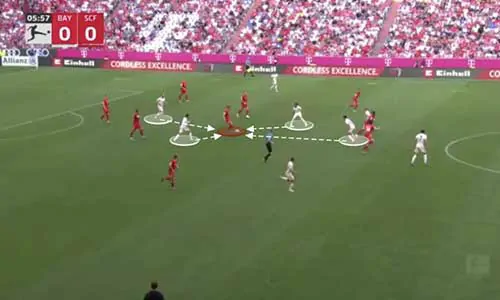
Table of Contents
- Introduction to Modern Football’s Ultimate Tactic
- The Origins and Evolution of Gegenpressing
- Gegenpressing Explained: The High-Pressure Football Strategy in Action
- The Four Core Types of Counter-Pressing
- Tactical Comparison: Klopp vs. Guardiola
- How to Train Gegenpressing Explained: The High-Pressure Football Strategy
- The Advantages and Disadvantages of High-Pressure Systems
- Why Gegenpressing Explained: The High-Pressure Football Strategy Dominates Modern Football
- Frequently Asked Questions (FAQ)
- Conclusion: Embracing the Intensity
Introduction to Modern Football’s Ultimate Tactic
Football has undergone a massive tactical revolution over the past two decades. Among the various strategic innovations that have shaped the modern game, few have had as profound an impact as the high-pressure system born in Germany. In this comprehensive guide, we provide a deep dive into Gegenpressing Explained: The High-Pressure Football Strategy, exploring how it reshaped European football and why it remains a dominant force today.
At its core, this tactic is not merely about running hard or defending from the front. Instead, it is a highly organized, systematically drilled defensive transition strategy designed to exploit the opponent’s moments of maximum vulnerability. By understanding its nuances, football enthusiasts and coaches alike can appreciate the sheer complexity behind the high-octane matches seen in the UEFA Champions League and domestic leagues worldwide.
Consequently, executing this style requires supreme physical conditioning, absolute tactical discipline, and a shared psychological commitment. Let us explore the origins, mechanics, and variations of this fascinating football philosophy.
The Origins and Evolution of Gegenpressing
While often associated with contemporary German coaches, the roots of counter-pressing stretch back several decades. Pioneers of the game laid the groundwork by challenging traditional ideas of spatial control. Legendary managers began to realize that defending did not have to start in one’s own half; it could start the very second possession was surrendered.
In the late 1960s and 1970s, Ernst Happel’s Feyenoord and Rinus Michels’ Ajax “Total Football” teams utilized primitive forms of pressing. They squeezed the pitch by pushing their defensive lines incredibly high. Later, Arrigo Sacchi’s legendary AC Milan side refined these spatial concepts, demonstrating how a compact defensive block could suffocate opponents through coordinated movement.
However, the modern iteration of the system was truly forged in Germany during the late 1990s and 2000s. Influential figures like Ralf Rangnick, often dubbed the “Godfather of Gegenpressing,” systemized the transition phase. Rangnick argued that the most vulnerable moment for any team is the first few seconds after they win the ball, as their players naturally begin to disperse to launch an attack. By attacking them in this precise moment, you catch them disorganized.
Gegenpressing Explained: The High-Pressure Football Strategy in Action
To fully grasp this concept, one must look at the immediate transition from attack to defense. In traditional football tactics, when a team loses the ball, the instinctive reaction is to retreat, drop deep, and re-establish a defensive shape. This is known as “falling back.”
Conversely, in Gegenpressing Explained: The High-Pressure Football Strategy, the immediate reaction to losing the ball is to hunt it back instantly. Instead of retreating, players sprint toward the ball-carrier and close down passing lanes. The ultimate goal is to win possession back in the opponent’s defensive third, close to their goal, where they are least prepared to defend.
This approach operates on a simple psychological premise: when an opponent wins the ball, they must shift their focus from defending to attacking. During this split second, they look down at the ball, search for passing options, and expand their shape. By applying intense pressure at this exact moment, you deny them the time to make a decision, leading to rushed passes, technical errors, and high-turnover situations.
To understand how this functions on a pitch, we can break down the primary triggers that prompt a coordinated counter-press:
- The Bad Touch Trigger: If an opponent receives the ball but miscontrols it slightly, nearby players immediately swarm them.
- The Sideline Trap: Forcing the ball-carrier toward the touchline, effectively using the boundary of the pitch as an extra defender.
- The Back-to-Goal Trigger: When an opponent receives a pass with their back to the attacking direction, preventing them from turning.
- The Slow Pass: A sluggish or under-hit lateral pass from the opposition that allows defensive players time to intercept.
The Four Core Types of Counter-Pressing
Not all high-pressure systems are identical. Different managers have developed unique methodologies to recover the ball. Depending on the tactical setup and squad profile, a team might employ one of the following four primary counter-pressing styles:
1. Man-Oriented Pressing: In this style, every player immediately marks the closest opponent as soon as possession is lost. The aim is to prevent any short passing options, forcing the ball-carrier into a high-risk long pass or an individual duel. Jürgen Klopp utilized variations of this during his early years at Borussia Dortmund.
2. Space-Oriented Pressing: Here, the focus is not on individual opponents but on the space surrounding the ball. Players construct a localized net around the ball-carrier, cut off passing lanes, and systematically squeeze the space until the opponent has nowhere to go.
3. Passing Lane-Oriented Pressing: Players allow the ball-carrier some initial time on the ball but position themselves to block all logical passing routes. This baiting technique often coaxes the opponent into making a predictable pass, which is then easily intercepted by waiting midfielders.
4. Ball-Oriented Pressing: This is the most aggressive variation. Regardless of structural shape or opponent positioning, multiple players converge directly on the ball-carrier simultaneously. It aims to completely overwhelm the opponent through sheer numbers and physical intensity.
Tactical Comparison: Klopp vs. Guardiola
To see how these concepts function at the highest level of professional football, it is highly beneficial to compare the philosophies of two of the game’s greatest modern tacticians: Jürgen Klopp and Pep Guardiola. While both employ high-pressure strategies, their underlying objectives and execution methods differ significantly.
Jürgen Klopp famously claimed that a well-executed counter-press is “the best playmaker in the world.” For Klopp, winning the ball back high up the pitch is a direct offensive tool. He wants his teams to transition rapidly, exploiting the chaotic state of the opponent’s defense to score within seconds of winning the ball. It is vertical, explosive, and highly direct.
In contrast, Pep Guardiola views high pressure primarily as a defensive and possession-control mechanism. Guardiola wants his teams to win the ball back quickly so they can retain possession, rest with the ball, and rebuild their methodical attacking shapes. If they cannot win it back within a few seconds, his players are instructed to drop into a structured block to prevent counter-attacks.
The table below highlights the key differences between these two elite tactical approaches:
| Tactical Dimension | Jürgen Klopp (Direct Style) | Pep Guardiola (Control Style) |
|---|---|---|
| Primary Goal | Create immediate goalscoring chances. | Recycle possession and prevent transitions. |
| Pressing Focus | Aggressive, ball-oriented swarm. | Positional, space, and lane-oriented. |
| Tempo After Recovery | Extremely fast, vertical attack. | Controlled, patient building of play. |
| Risk Level | High (can leave spaces behind). | Medium (prioritizes structural safety). |
How to Train Gegenpressing Explained: The High-Pressure Football Strategy
Implementing a high-pressure system requires rigorous training on the practice pitch. Coaches cannot simply instruct their players to “run faster.” Instead, they must design specific training environments that develop cognitive speed, spatial awareness, and instant physical reaction times.
One of the most effective ways to train this tactic is through modified rondo drills. In a typical rondo, a group of players keeps possession while one or two players try to win the ball back. To adapt this for counter-pressing, coaches introduce the “transition rule.” The moment the defenders win the ball, the possession players must instantly transition into defenders, attempting to win the ball back within five seconds.
Additionally, small-sided games (e.g., 4v4 or 5v5 on a tight pitch with mini-goals) are highly effective. These games increase the frequency of transitions, forcing players to react to turnovers constantly. Coaches often reward double points if a team scores within five to eight seconds of winning possession, reinforcing the attacking value of the high press.
Furthermore, physical preparation is paramount. Players must build elite cardiovascular endurance and explosive sprint capacity. Without exceptional fitness levels, a high-pressure system will inevitably collapse in the final thirty minutes of a match, leaving massive gaps for the opponent to exploit.
The Advantages and Disadvantages of High-Pressure Systems
Like any tactical system in football, this strategy is not a magic bullet. It offers immense rewards but also carries significant risks. Managers must carefully weigh these factors against the strengths of their squad before adopting this demanding philosophy.
On the positive side, a highly functional counter-press completely disrupts the opponent’s build-up play. Teams that prefer to play out from the back are often forced into committing critical errors in dangerous areas. Additionally, it reduces the distance your team has to travel to reach the opponent’s goal, leading to highly efficient attacking transitions.
On the other hand, the physical toll on the players is immense. Over the course of a grueling multi-front season, squads that rely heavily on constant high pressing often suffer from muscle fatigue, injuries, and mental burnout. Consequently, squads must have deep rosters and rotate players regularly to maintain peak tactical intensity.
Moreover, if the initial press is bypassed, the team is highly vulnerable. Because players must push up high to support the press, the defensive line often plays with a “high line.” A single precise pass from a press-resistant midfielder can release fast opposition forwards into acres of open space, leaving the goalkeeper heavily exposed.
Why Gegenpressing Explained: The High-Pressure Football Strategy Dominates Modern Football
Despite the inherent risks, this tactic remains the gold standard of modern elite football. The reason for its dominance lies in the evolution of athletic profiles. Modern football players are faster, stronger, and more tactically aware than ever before. This physical evolution allows teams to sustain intense pressure for longer periods.
Furthermore, rule changes and technological advancements have favored the pressing side. The introduction of the rule allowing goal kicks to be received inside the penalty box has encouraged teams to play short passes from the back. Consequently, this has provided high-pressing teams with the perfect opportunity to trap opponents deep inside their own territory.
Additionally, modern analytics heavily support the efficiency of high-turnover goals. Statistical data compiled by tactical analysts shows that goals scored within ten seconds of winning possession high up the pitch have a significantly higher Expected Goals (xG) value than goals constructed through long, slow build-up phases. Thus, the strategy aligns perfectly with modern data-driven coaching.
For deeper analytical insights into how professional clubs utilize data to optimize their tactical setups, you can explore the technical reports provided by UEFA. Understanding these metrics is vital for anyone wishing to study the game at an elite level.
Frequently Asked Questions (FAQ)
To help consolidate your understanding of this complex tactical framework, we have answered some of the most common questions regarding high-pressure football systems below.
1. What does the term “Gegenpressing” actually mean?
It is a German term that literally translates to “counter-pressing.” It refers to the tactical action of immediately pressing the opposition to regain possession the moment a team loses the ball, rather than retreating into a defensive shape.
2. How does counter-pressing differ from regular pressing?
Regular pressing can happen at any time, even when the opponent has established structured possession. Counter-pressing, however, refers specifically to the immediate transition phase—the first 5 to 6 seconds directly after losing the ball.
3. Why is the “five-second rule” so important in this tactic?
The five-second rule is a mental trigger. If a team cannot win the ball back within five seconds of intense pressing, they must abandon the press and rapidly drop into a compact mid-block to prevent the opponent from exploiting the space behind them.
4. What kind of players are needed for a successful high-pressure system?
It requires highly energetic, physically fit, and tactically intelligent players. Midfielders must possess exceptional stamina, while defenders must be comfortable playing with a high defensive line and defending large spaces behind them.
5. Can amateur or youth teams implement this strategy?
Yes, but it must be simplified. Coaches should focus on teaching the mental transition—encouraging players to instantly hunt the ball when lost—rather than complex spatial traps which require elite coordination.
6. How do teams counter or beat a high-pressing opponent?
Teams often beat the press by playing direct, long vertical passes to target-man strikers, utilizing press-resistant midfielders who can turn under pressure, or quickly shifting the play to the opposite flank where space is less congested.
Conclusion: Embracing the Intensity
In conclusion, the tactical framework of Gegenpressing Explained: The High-Pressure Football Strategy is far more than a physical gimmick; it is a highly sophisticated, deeply intellectual approach to modern football. By systematically targeting the opponent’s transition phase, managers can dictate the tempo of the game, stifle creative playmakers, and generate high-quality goalscoring chances from defensive actions.
While the physical demands are extraordinarily high and the tactical risks are substantial, the rewards of mastering this system speak for themselves in the trophy cabinets of elite clubs across Europe. As football continues to evolve, the principles of space, intensity, and transition control will undoubtedly remain at the very heart of the beautiful game.
For more detailed tactical breakdowns, expert match analyses, and breaking football news, be sure to keep up with the latest insights on BBC Sport. We invite you to join the conversation below. What are your thoughts on this high-octane style? Does your favorite club have the discipline to execute it? Let us know in the comments section!