Box-to-Box Midfielder Explained: Duties, Skills and Tactical Importance
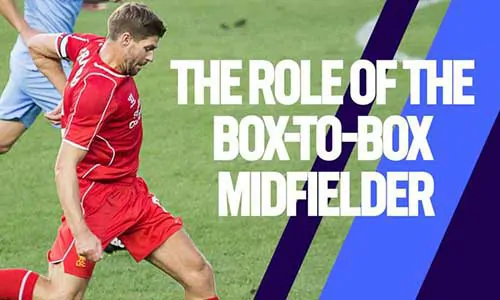
In the theatre of modern football, where tactical setups are increasingly specialized and rigid, the all-action midfield engine remains one of the most exciting sights on the pitch. While some players specialize purely in disrupting attacks or orchestrating play from deep, the box-to-box midfielder is a rare breed capable of doing it all. Operating tirelessly between their own penalty area and the opponent’s, these athletes provide the essential glue that binds defensive solidity and attacking creativity together. In this comprehensive guide, we have the box-to-box midfielder explained: duties, skills and tactical importance detailed to help you understand how this vital role functions on the pitch.
Table of Contents
- 1. What is a Box-to-Box Midfielder?
- 2. The Historical Evolution of the Midfield Engine
- 3. Core Duties of a Modern Box-to-Box Midfielder
- 4. Key Skills That Define a World-Class Box-to-Box Midfielder
- 5. Tactical Importance of the Box-to-Box Midfielder in Different Formations
- 6. Iconic Examples of the Ultimate Box-to-Box Midfielder
- 7. How to Train and Improve in This Demanding Position
- 8. Frequently Asked Questions (FAQs)
What is a Box-to-Box Midfielder?
To define it simply, a box-to-box midfielder is a central midfielder who has the physical capacity, tactical awareness, and technical ability to contribute effectively in both defense and attack. Unlike highly specialized positions, such as a defensive screen or an advanced playmaker, this role demands active participation in all phases of play.
The term literally describes a player who runs from their own penalty box to the opponent’s penalty box throughout the 90 minutes. Consequently, the dynamic nature of the box-to-box midfielder makes them the heartbeat of any team. They must possess the tenacity to win back possession deep in their own half and, seconds later, the composure to finish an attacking move in the opponent’s penalty area.
In modern football terminology, this player is often referred to as a “number eight.” However, unlike a deep-lying playmaker who dictates tempo from a stationary position, a box-to-box midfielder must physically carry the ball forward, break opposing lines with direct running, and aggressively press opponents to force turnovers.
The Historical Evolution of the Midfield Engine
Historically, the midfield was less specialized than it is today. In the classic 4-4-2 formations of the 1980s and 1990s, midfielders were naturally expected to perform both defensive and offensive duties. However, as tactics evolved and coaches began prioritizing structural control, roles became increasingly fragmented.
For instance, the rise of the 4-2-3-1 formation in the early 2010s saw the midfield split into clear defensive screens and advanced playmakers. This shift initially threatened to make the classic, all-action midfielder obsolete. On the other hand, the high-pressing systems popularized by modern managers have led to a massive resurgence in the demand for complete, athletic midfielders.
Today, teams cannot afford to carry passengers who only perform one function. As a result, the contemporary midfield engine has evolved from a brute physical runner into a highly tactical, technically gifted asset who can adapt to various game states instantly.
Core Duties of a Modern Box-to-Box Midfielder
A modern box-to-box midfielder is tasked with maintaining the team’s tactical balance. Their duties vary dramatically depending on whether the team has possession of the ball or is working to win it back.
1. Defensive Phase: Shielding and Recovery
When out of possession, the primary goal of this player is to disrupt the opponent’s build-up. They act as a secondary line of defense, supporting the holding midfielder by tracking runners, closing down spaces, and engaging in central duels.
Furthermore, their defensive work rate helps the box-to-box midfielder protect the backline during quick transitions. They must quickly identify danger, drop deep to cover for out-of-position full-backs, and make crucial interceptions or tackles near their own penalty area.
2. Transition Phase: Progressive Ball Carrying
The transition phase is where these players truly shine. Once possession is regained, they are responsible for moving the ball out of danger and transitioning into the attacking phase. This is achieved through two main methods: progressive passing and ball carrying.
An exceptional work rate forces the box-to-box midfielder to carry the ball past the opponent’s first line of pressure. By driving forward with the ball at their feet, they draw defenders out of position, creating space for their team’s wingers and forwards.
3. Attacking Phase: Late Runs and Overloads
In the final third, these players act as a chaotic element that opposing defenses struggle to track. Because they start their runs from deep midfield positions, they are incredibly difficult to mark for central defenders who are already occupied by strikers.
Furthermore, a top-tier box-to-box midfielder will consistently make late runs to the edge of the penalty area, arriving just in time to convert cutbacks or rebound loose balls. Additionally, they contribute by offering a long-range shooting threat and creating numerical overloads in wide spaces.
Key Skills That Define a World-Class Box-to-Box Midfielder
To successfully execute these diverse duties, a player must possess an extraordinary combination of physical, technical, and mental attributes. Without a complete skill set, they risk becoming a liability in one or both directions.
1. Elite Physical Stamina and Work Rate
First and foremost, stamina is the hallmark of any box-to-box midfielder. These players routinely cover between 11 and 13 kilometers per match. Their physical routine consists of continuous high-intensity interval sprinting rather than a steady jog.
Consequently, they require exceptional cardiovascular endurance and rapid recovery times. They must also possess the functional strength required to win physical duels, shield the ball under heavy pressure, and consistently make explosive runs even in the final minutes of a match.
2. Technical Versatility
In addition to physical traits, a successful box-to-box midfielder needs a highly versatile technical toolkit. Since they operate in the most congested areas of the pitch, their first touch and ball-control must be immaculate.
Their technical requirements include:
- Passing Range: The ability to play short, quick combinations under pressure, as well as sweeping diagonal passes to switch the play.
- Ball Protection: Utilizing their body to shield the ball from aggressive, pressing defenders.
- Finishing Ability: Composure in front of goal to convert chances from late runs or strike cleanly from distance.
- Tackling Technique: Winning the ball cleanly without committing dangerous fouls in central areas.
3. Exceptional Tactical Intelligence
Tactical intelligence allows the box-to-box midfielder to understand when to join the attack and when to hold their position. If they push forward too early, they leave their midfield partner exposed to counter-attacks. Conversely, if they sit too deep, the team loses its attacking depth.
Therefore, they must constantly scan the pitch to assess the positioning of teammates and opponents alike. This constant spatial awareness helps them make split-second decisions that preserve the team’s structural balance.
Tactical Importance of the Box-to-Box Midfielder in Different Formations
The tactical application of this role changes significantly depending on the manager’s chosen system. Let us examine how they function in the most popular modern formations.
1. The 4-3-3 Formation: The Twin Eights
In a traditional 4-3-3 system, the box-to-box midfielder typically partners with a holding defensive midfielder (a number six) and a creative advanced playmaker (a number ten). This setup provides a perfect balance of roles.
While the holding midfielder shields the defense and the playmaker creates chances, the box-to-box player acts as the dynamic link between them. They have the license to push forward into the half-spaces, sometimes operating as a “mezzala” to create wide overloads alongside the winger and full-back. To learn more about how these roles function together, you can read the Coaches’ Voice explanation of the modern number eight role.
2. The 4-2-3-1 Formation: The Double Pivot
Many modern systems rely on a box-to-box midfielder to sit within a double pivot in a 4-2-3-1 formation. In this setup, they partner with a pure ball-winning defensive midfielder.
This partnership requires excellent communication. When the defensive midfielder sits deep to protect the center-backs, the box-to-box partner is given the freedom to drive forward and support the attacking quartet. However, they must remain disciplined enough to quickly drop back and reform the defensive block when possession is lost.
3. The 3-5-2 Formation: Central Dominance
In a 3-5-2 system, the midfield trio is flanked by two wing-backs. This gives the central box-to-box players more security, as the wing-backs provide natural width. Consequently, the central engine can focus heavily on making vertical, driving runs directly through the center of the pitch to overload the opponent’s penalty area.
Iconic Examples of the Ultimate Box-to-Box Midfielder
To truly understand this position, it is helpful to look at the legendary figures who have defined it over the years, alongside the modern stars carrying the torch today.
When discussing historical legends, the classic box-to-box midfielder is epitomized by players like Steven Gerrard and Frank Lampard. Gerrard possessed an extraordinary blend of ferocious tackling, long-range passing, and a legendary ability to score crucial goals. Lampard, meanwhile, mastered the art of the late run, scoring over 200 club goals from midfield through sheer tactical intelligence and relentless work rate.
In the modern era, players like Federico Valverde and Jude Bellingham have adapted the role to meet the demands of contemporary, high-intensity pressing football. They combine elite athleticism with technical brilliance, showing how a box-to-box midfielder can dominate games in multiple phases of play.
The table below highlights the subtle differences in attributes between the classic and modern interpretations of the role:
| Era Type | Key Proponents | Primary Focus | Tactical Role |
|---|---|---|---|
| Classic Era (1990s-2000s) | Steven Gerrard, Patrick Vieira, Roy Keane | Individual physical dominance, long-range shooting, heroic tackle recovery. | Traditional dynamic midfielder in a 4-4-2. |
| Modern Era (2010s-Present) | Jude Bellingham, Federico Valverde, Nicolò Barella | Positional fluid movement, high-intensity counter-pressing, half-space exploitation. | Fluid “number eight” or double-pivot engine. |
For a deeper dive into how elite coaches utilize these athletic players to break down modern low-blocks, you can explore FourFourTwo’s tactical guide on midfield roles.
How to Train and Improve in This Demanding Position
To train effectively as a box-to-box midfielder, an athlete must focus on building game-specific endurance alongside technical proficiency under pressure.
Firstly, generic long-distance running is highly inefficient for this role. Instead, players should implement High-Intensity Interval Training (HIIT) that mimics the constant acceleration, deceleration, and recovery cycles experienced during a match.
Secondly, training drills must emphasize rapid transition. For example, coaches should utilize transition-based possession games where players are forced to win the ball in a defensive grid and immediately execute a long-range pass or drive forward into an attacking zone. Finally, practicing the “scanning” technique—turning the head to assess space before receiving the ball—is essential for surviving in congested central areas.
Frequently Asked Questions (FAQs)
They typically wear the number 8 shirt, as this number is historically associated with the central, all-action midfielder who links defense (traditionally numbers 4 and 6) with attack (numbers 9, 10, and 11).
No. While both operate in central midfield, a deep-lying playmaker (or regista) sits deep to orchestrate play through passing. In contrast, a box-to-box midfielder is far more mobile, physically driving forward into the opponent’s penalty area and actively engaging in high-intensity defensive pressing.
Yes, provided they develop the necessary attacking instinct, passing range, and physical engine. Many top players begin their careers as defensive screens before moving forward once their tactical and technical maturity allows them to contribute to attacking phases.
On average, they cover between 11 and 13 kilometers per 90-minute match. This is typically the highest distance covered by any position on the pitch, highlighting why supreme cardiovascular fitness is non-negotiable.
A Mezzala is a specific type of central midfielder who drifts wide into the half-spaces or wing areas to create overloads. A box-to-box midfielder operates more centrally, moving in a direct vertical path from penalty area to penalty area, though modern systems sometimes blur these lines.
They are highly valued because they possess an incredibly rare combination of elite physical athleticism and high technical skill. Finding a player who can defend robustly and score goals at a world-class level is extremely difficult, making them highly prized assets for top-tier clubs.
Conclusion
The box-to-box midfielder remains one of the most demanding, influential, and tactical roles in football. These players serve as the engine room of their teams, providing tireless defensive cover, rapid transitions, and a goal-scoring threat from deep. As modern systems continue to prioritize high-intensity pressing and fluid positioning, the value of a complete central midfielder will only continue to rise.
Do you prefer an all-action midfield engine or a tactical playmaker in your squad? Let us know your thoughts in the comments below, and don’t forget to share this tactical breakdown with your fellow football fans!