Ballon d’Or Winners Ranked: Players with the Most Awards
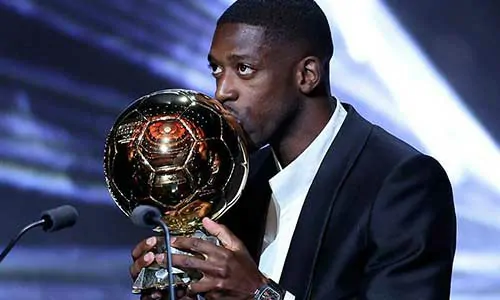
For more than six decades, the Ballon d’Or has stood as the pinnacle of individual achievement in the footballing world. Established by the prestigious French publication France Football in 1956, this iconic golden trophy represents the ultimate validation of a player’s mastery, consistency, and impact on the pitch. Over the years, only a select group of legendary athletes have managed to hoist this coveted award multiple times. In this comprehensive guide, we present the definitive Ballon d’Or Winners Ranked: Players with the Most Awards, celebrating the extraordinary geniuses who have dominated different eras of the beautiful game.
Whether you are a passionate fan of modern maestros or a scholar of classic European football, understanding the historical distribution of this prize offers a fascinating window into the sport’s evolution. Historically, the debate surrounding the Ballon d’Or Winners Ranked: Players with the Most Awards has always been intense, capturing the imaginations of supporters worldwide. Consequently, this deep dive will analyze the achievements, eras, and statistical dominance of the players who have won the Golden Ball more than once, leading all the way up to the most recent ceremonies.
Table of Contents
- The Evolution of the Ballon d’Or
- How Lionel Messi Redefined Ballon d’Or Winners Ranked: Players with the Most Awards
- Cristiano Ronaldo’s Impact on Ballon d’Or Winners Ranked: Players with the Most Awards
- The Hat-Trick Club: Legendary Three-Time Winners
- The Elite Double: Two-Time Ballon d’Or Recipients
- The Modern Era: Recent Pioneers (2024–2025)
- The Rise of the Ballon d’Or Féminin
- A Comprehensive Table of Ballon d’Or Winners Ranked: Players with the Most Awards
- Frequently Asked Questions (FAQ)
The Evolution of the Ballon d’Or
To fully appreciate the hierarchy of the sport’s greatest players, it is vital to examine how the rules of the award have changed. Initially, from 1956 to 1994, the Ballon d’Or was strictly reserved for European players playing at European clubs. This era-specific restriction explains why legendary figures like Pelé and Diego Maradona never officially won the trophy during their active careers. However, in 1995, France Football opened the nominations to any player active at a European club, regardless of their nationality.
Furthermore, in 2007, the award became truly global, allowing players from any league in the world to be nominated. In more recent times, another major structural shift occurred: starting in 2022, the evaluation period transitioned from a standard calendar year to a European season format. This modification aligned the prize more closely with the natural flow of competitive club campaigns. Because of these changes, analyzing the modern list of the Ballon d’Or Winners Ranked: Players with the Most Awards requires looking at different eras through unique historical lenses.
How Lionel Messi Redefined Ballon d’Or Winners Ranked: Players with the Most Awards
When studying Lionel Messi’s place in the Ballon d’Or Winners Ranked: Players with the Most Awards, it is clear that the Argentine magician has set a benchmark that may never be surpassed. With an astonishing eight Ballon d’Or trophies to his name, Messi’s career has been nothing short of a fairy tale. He captured his first golden ball in 2009 at the age of 22, sparking an era of unparalleled individual dominance. Between 2009 and 2012, Messi achieved the unprecedented feat of winning four consecutive Ballon d’Or awards, orchestrating Pep Guardiola’s historic Barcelona team.
Messi’s subsequent victories in 2015, 2019, 2021, and 2023 highlighted his incredible adaptability. Over the years, he evolved from a lightning-fast winger into a master playmaker and, ultimately, a World Cup-winning captain. His eighth trophy in 2023 was primarily propelled by his legendary performance at the 2022 FIFA World Cup in Qatar, where he led Argentina to glory. This historic victory cemented his status at the absolute pinnacle of the sport’s history, rewriting the record books forever.
“To win eight Ballon d’Or awards is something I could never have imagined. I was lucky to play for the best team in history and to achieve my ultimate dream with Argentina.” — Lionel Messi
Cristiano Ronaldo’s Impact on Ballon d’Or Winners Ranked: Players with the Most Awards
No discussion of footballing greatness is complete without mentioning the fierce rivalry that defined a generation. Consequently, Cristiano Ronaldo’s journey through the Ballon d’Or Winners Ranked: Players with the Most Awards is a testament to relentless work ethic, athletic perfection, and elite goal-scoring ability. The Portuguese forward has claimed the prestigious prize five times, representing two of the biggest clubs in the world: Manchester United and Real Madrid.
Ronaldo won his first Ballon d’Or in 2008 after guiding Manchester United to a UEFA Champions League title. Following his record-breaking transfer to Real Madrid, he went on to secure the award in 2013, 2014, 2016, and 2017. During this golden period, Ronaldo was the spearhead of a Real Madrid side that dominated European football. His ability to perform on the biggest stages, particularly in the knockout rounds of the Champions League, made him a natural recipient of the Golden Ball. Although his rivalry with Messi was intense, it pushed both players to reach heights previously thought impossible in modern football.
The Hat-Trick Club: Legendary Three-Time Winners
Before the Messi-Ronaldo duopoly completely rewrote the history of individual awards, reaching three Ballon d’Or victories was considered the ultimate standard of greatness. Only three players in history have achieved this milestone, and each of them left an indelible mark on the tactical evolution of the game.
- Johan Cruyff (1971, 1973, 1974): The Dutchman was the conceptual mastermind behind “Total Football.” Cruyff’s intelligence, spatial awareness, and technical skill earned him three awards during his time with Ajax and Barcelona. He did not just win trophies; he redefined how football was played and coached for generations to come.
- Michel Platini (1983, 1984, 1985): The elegant French midfielder dominated the mid-1983s with Juventus. Platini became the first player in history to win three consecutive Ballon d’Or trophies, combining masterful playmaking with a lethal goal-scoring instinct that carried both club and country to international glory.
- Marco van Basten (1988, 1989, 1992): Known as one of the most complete strikers to ever step onto a pitch, the Dutch forward won his three trophies during a legendary era with AC Milan. Despite his career being tragically cut short by persistent ankle injuries at the age of 28, Van Basten’s peak performance remains legendary.
In addition, looking at these three-time Ballon d’Or Winners Ranked: Players with the Most Awards shows how tactical intelligence and technical superiority have always been highly valued by the international voting panel of journalists, coaches, and captains.
The Elite Double: Two-Time Ballon d’Or Recipients
Winning the Ballon d’Or once is a dream; winning it twice requires sustaining world-class form across multiple seasons. The list of two-time winners features defensive pioneers, revolutionary attackers, and icons of European and South American football history.
Franz Beckenbauer, often referred to as “Der Kaiser,” won the award in 1972 and 1976. He remains one of the few defensive players to win the award, thanks to his invention of the modern “sweeper” or libero role. Meanwhile, Brazilian icon Ronaldo Nazário (“O Fenômeno”) captured the award in 1997 and 2002. His 2002 victory is widely regarded as one of the greatest comeback stories in sports history, as he bounced back from career-threatening knee operations to guide Brazil to a World Cup triumph.
Other legendary two-time winners include Alfredo Di Stéfano (1957, 1959), Karl-Heinz Rummenigge (1980, 1981), and Kevin Keegan (1978, 1979). Di Stéfano was so highly regarded that in 1989, he was awarded the unique “Super Ballon d’Or” by France Football, a prize specifically created to honor the best player of the previous three decades.
The Modern Era: Recent Pioneers (2024–2025)
With the gradual transition of the older generation, the landscape of global football has opened up, paving the way for fresh talent to write their own histories. In 2024, Manchester City and Spain midfielder Rodri claimed the Ballon d’Or after orchestrating an incredibly successful season for both his club and national team. His brilliant defensive midfield play was crucial in securing both the Premier League title and the UEFA European Championship, proving that elite defensive midfielders can still receive the ultimate individual appreciation.
The following year, the 2025 ceremony at the Théâtre du Châtelet in Paris crowned French forward Ousmane Dembélé as the newest recipient of the Golden Ball. Dembélé delivered a sensational season with Paris Saint-Germain, leading them to their historic first-ever UEFA Champions League title alongside a domestic double. With his blistering pace and creative output, he took home the top honor ahead of Spain’s rising star Lamine Yamal. These recent developments indicate that the circle of winners is expanding, promising an exciting and highly competitive future for the sport.
The Rise of the Ballon d’Or Féminin
To ensure a comprehensive analysis, we must also highlight the incredible progress of the women’s game. Established in 2018, the Ballon d’Or Féminin has quickly become the most prestigious individual honor in women’s football. Spain and Barcelona have completely dominated the recent history of this award, showcasing their technical supremacy on both the European and global stages.
Alexia Putellas made history by winning consecutive awards in 2021 and 2022, demonstrating her world-class midfield control. Following her success, her Barcelona teammate Aitana Bonmatí took the spotlight. Bonmatí won three consecutive Ballon d’Or Féminin trophies in 2023, 2024, and 2025, matching her team’s dominance in the UEFA Women’s Champions League and the Spanish league. This incredible achievement firmly places her among the absolute legends of the sport, inspiring millions of young players around the globe.
A Comprehensive Table of Ballon d’Or Winners Ranked: Players with the Most Awards
Below is the detailed historical table of the multiple-time Ballon d’Or Winners Ranked: Players with the Most Awards, showcasing their nationalities, clubs represented, and the years they dominated the beautiful game:
| Rank | Player | Nationality | Awards | Winning Years |
|---|---|---|---|---|
| 1 | Lionel Messi | Argentina | 8 | 2009, 2010, 2011, 2012, 2015, 2019, 2021, 2023 |
| 2 | Cristiano Ronaldo | Portugal | 5 | 2008, 2013, 2014, 2016, 2017 |
| 3 | Michel Platini | France | 3 | 1983, 1984, 1985 |
| – | Johan Cruyff | Netherlands | 3 | 1971, 1973, 1974 |
| – | Marco van Basten | Netherlands | 3 | 1988, 1989, 1992 |
| 6 | Franz Beckenbauer | Germany | 2 | 1972, 1976 |
| – | Ronaldo Nazário | Brazil | 2 | 1997, 2002 |
| – | Alfredo Di Stéfano | Spain / Argentina | 2 | 1957, 1959 |
| – | Karl-Heinz Rummenigge | Germany | 2 | 1980, 1981 |
| – | Kevin Keegan | England | 2 | 1978, 1979 |
Therefore, this complete compilation of the Ballon d’Or Winners Ranked: Players with the Most Awards highlights how hard it is to maintain peak performance. For additional detailed football history, you can explore Britannica’s Football Records or check the official updates on UEFA’s official website.
Conclusion
Ultimately, the prestigious circle of the Ballon d’Or Winners Ranked: Players with the Most Awards represents the absolute elite of footballing history. From Lionel Messi’s staggering eight victories to the historical milestones of Johan Cruyff, Michel Platini, and Franz Beckenbauer, these players have defined eras, broke records, and inspired generations. The landscape continues to evolve, as seen with modern winners like Rodri in 2024 and Ousmane Dembélé in 2025, alongside Aitana Bonmatí’s remarkable run in the women’s game.
As football transitions into a new chapter, who do you believe will be the next player to join this elite list of multi-time winners? Will Erling Haaland, Kylian Mbappé, or Lamine Yamal rise to dominate the coming decade? Let us know your thoughts in the comments below, and don’t forget to share this article with your fellow football enthusiasts!
Frequently Asked Questions (FAQ)
1. Who has won the most Ballon d’Or awards in history?
Lionel Messi holds the record for the most Ballon d’Or awards in history, having won the prestigious trophy eight times (2009, 2010, 2011, 2012, 2015, 2019, 2021, and 2023). Cristiano Ronaldo is in second place with five awards.
2. Has any defender ever won the Ballon d’Or multiple times?
Yes, Franz Beckenbauer is the only defender in football history to have won the Ballon d’Or multiple times, claiming the award in 1972 and 1976. His revolutionary role as a sweeper transformed the modern game.
3. Who won the Men’s and Women’s Ballon d’Or in 2025?
Ousmane Dembélé won the Men’s Ballon d’Or in 2025 after a phenomenal season leading Paris Saint-Germain to a Champions League victory. Meanwhile, Aitana Bonmatí won her third consecutive Women’s Ballon d’Or, reflecting Barcelona’s dominance.
4. Why did Pelé and Diego Maradona never win the Ballon d’Or?
Until 1995, the Ballon d’Or was restricted to European players playing in Europe. Since Pelé spent his peak years in Brazil and Maradona was non-European (despite playing in Europe), they were ineligible during their playing eras.
5. How is the winner of the Ballon d’Or decided?
The winner is selected through a voting process conducted by an international panel of specialized sports journalists, national team coaches, and captains. They evaluate individual performances, team achievements, and sportsmanship over the course of a football season.
6. Who is the youngest player to win the Ballon d’Or?
Ronaldo Nazário is the youngest player to win the Ballon d’Or, securing his first trophy in 1997 at the age of 21 years and 3 months. His incredible blend of power, skill, and speed revolutionized the striker position.